
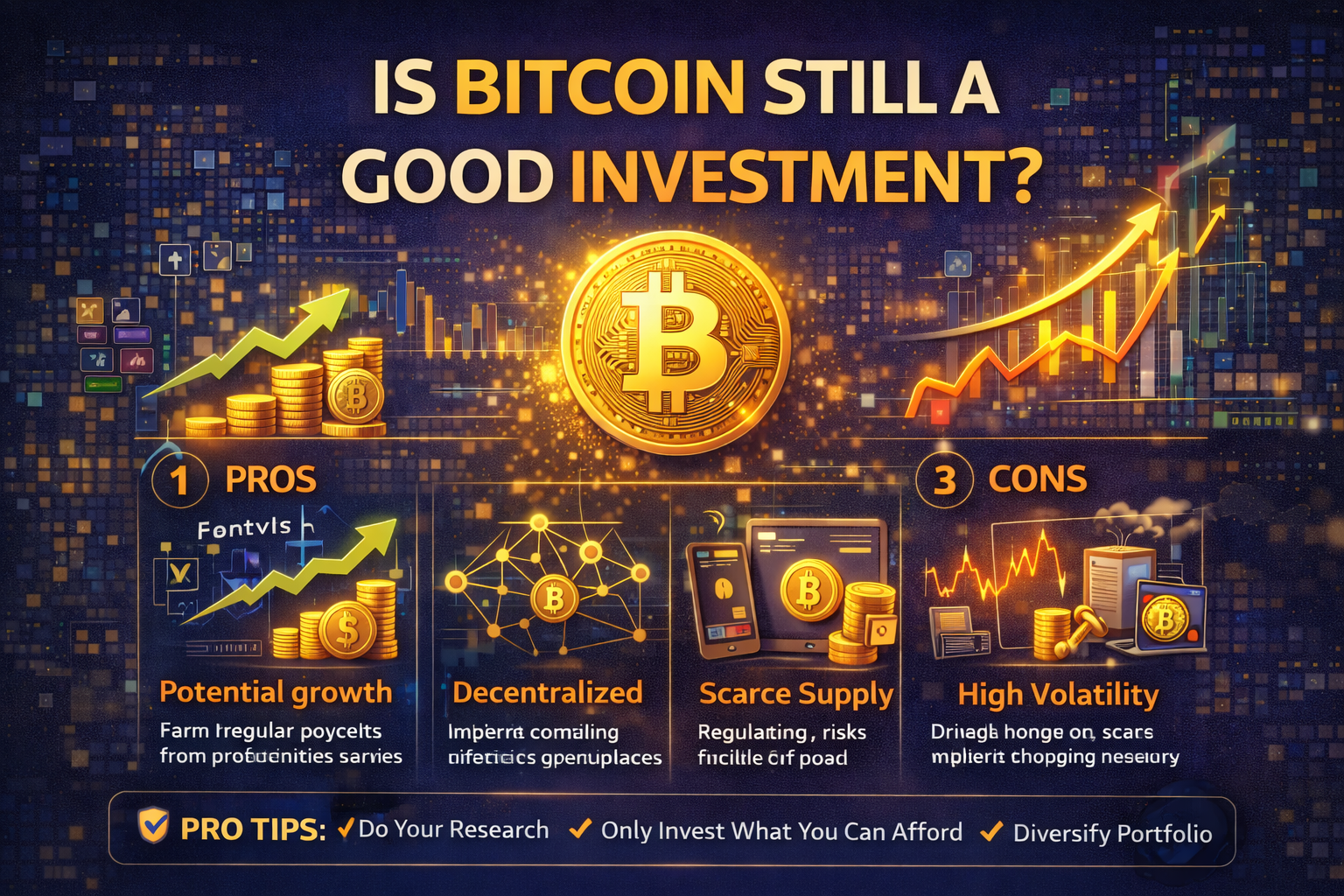
I still remember the exact moment I bought my first Bitcoin. It was 2017, and the price was hovering around $8,000. I’d been watching for months, waiting for a “dip.” When it finally came, I nervously clicked “buy” with $500. I had no idea what I was doing. I just knew that everyone was talking about it, and I didn’t want to miss out.
What followed was a crash course in crypto volatility. Bitcoin soared to $19,000. I felt like a genius. Then it crashed to $6,000. I felt like an idiot. I sold at the bottom, locked in my losses, and swore I’d never touch Bitcoin again.
That was eight years ago. Since then, I’ve watched Bitcoin go through boom and bust cycles repeatedly. Each crash was declared the “death of crypto.” Each recovery reached new highs. And each time, the question came back: is Bitcoin still a good investment?
Today, in 2026, that question is more relevant than ever. Bitcoin has matured. Institutional investors have entered. Regulation is evolving. The “digital gold” narrative has taken hold. But volatility remains. Risks remain. And the debate between believers and skeptics is as heated as ever.
In this guide, I’ll help you answer is Bitcoin still a good investment for yourself. We’ll look at the bull case, the bear case, historical performance, current trends, and practical considerations. I won’t tell you what to do. I’ll give you the information you need to make your own decision.
Let’s dive into the question that’s on every investor’s mind.
Part 1: The Bitcoin Story So Far
To understand is Bitcoin still a good investment, we need to understand where it’s been.
A Brief History
| Year | Event | Price (Approx) |
|---|---|---|
| 2009 | Bitcoin launched | $0 |
| 2010 | First real-world transaction (10,000 BTC for two pizzas) | $0.0008 |
| 2013 | First major bubble (peaked at $1,100, crashed to $200) | $1,100 |
| 2017 | Mainstream attention, peaked at $19,000 | $19,000 |
| 2018-2019 | “Crypto winter” (dropped to $3,000) | $3,000 |
| 2020-2021 | Institutional adoption, peaked at $69,000 | $69,000 |
| 2022 | Bear market, FTX collapse, dropped to $16,000 | $16,000 |
| 2023-2024 | Recovery, spot ETFs approved | $45,000-$60,000 |
| 2025-2026 | Continued growth, institutional inflows | Varies |
The Halving Cycles
Bitcoin’s supply is capped at 21 million coins. Every four years, the “halving” cuts the reward for mining new blocks in half. This reduces the rate of new supply entering the market.
| Halving Date | Block Reward Before | Block Reward After | Price Impact |
|---|---|---|---|
| 2012 | 50 BTC | 25 BTC | Bull run followed |
| 2016 | 25 BTC | 12.5 BTC | Bull run followed |
| 2020 | 12.5 BTC | 6.25 BTC | Bull run followed |
| 2024 | 6.25 BTC | 3.125 BTC | Bull run (partial) |
| 2028 (expected) | 3.125 BTC | 1.5625 BTC | Unknown |
Historically, halvings have been followed by significant price increases. But past performance doesn’t guarantee future results.
Part 2: The Bull Case—Why Bitcoin Is Still a Good Investment
Let’s explore the arguments for is Bitcoin still a good investment.
Argument #1: Digital Gold
Bitcoin shares key characteristics with gold: scarce, durable, divisible, portable, and fungible. Unlike gold, Bitcoin is digital, verifiable, and transferable anywhere instantly.
| Characteristic | Gold | Bitcoin |
|---|---|---|
| Scarcity | Limited supply | Capped at 21 million |
| Durability | Indestructible | Digital—cannot be destroyed |
| Divisibility | Can be divided into small units | Divisible to 100 million satoshis |
| Portability | Heavy, expensive to move | Digital, instant transfer |
| Verifiability | Requires testing | Blockchain verification |
| Custody | Physical vaults | Self-custody possible |
Why this matters: As governments print money and inflation erodes purchasing power, scarce assets tend to preserve value. Bitcoin’s fixed supply makes it an attractive hedge.
Argument #2: Institutional Adoption
The narrative that Bitcoin is only for retail speculators is outdated. Major institutions have entered.
| Institution | Bitcoin Involvement |
|---|---|
| BlackRock | Spot Bitcoin ETF (IBIT) |
| Fidelity | Bitcoin custody and ETF |
| MicroStrategy | Over 200,000 BTC on balance sheet |
| Tesla | Held Bitcoin (sold most, but remains interested) |
| Square (Block) | Bitcoin treasury |
| Major banks | Custody, trading, research |
Why this matters: Institutional involvement brings legitimacy, liquidity, and reduced volatility over time.
Argument #3: Scarcity and the Halving Cycle
Bitcoin’s supply schedule is predictable and transparent. Every four years, the new supply gets cut in half. By 2140, the last Bitcoin will be mined.
| Year | Bitcoin Mined (Cumulative) | % of Total |
|---|---|---|
| 2012 | 10.5 million | 50% |
| 2016 | 15.75 million | 75% |
| 2020 | 18.375 million | 87.5% |
| 2024 | 19.687 million | 93.75% |
| 2028 | 20.343 million | 96.875% |
| 2032 | 20.671 million | 98.437% |
Why this matters: As new supply diminishes, simple economics suggests price pressure from demand should increase—if demand remains constant or grows.
Argument #4: Global Accessibility
Bitcoin is borderless. Anyone with an internet connection can send, receive, and hold Bitcoin. No bank account required. No credit check. No permission needed.
| Region | Unbanked Population | Bitcoin Opportunity |
|---|---|---|
| Sub-Saharan Africa | 400M+ | Remittances, savings |
| Latin America | 200M+ | Inflation hedge |
| Southeast Asia | 200M+ | Access to global economy |
| Eastern Europe | 100M+ | Banking alternative |
Why this matters: For billions of people, Bitcoin offers financial access that traditional banking doesn’t.
Argument #5: Historical Returns
Despite volatility, Bitcoin has outperformed every other asset class over the past decade.
| Time Period | Bitcoin Return | S&P 500 Return |
|---|---|---|
| 5 years (2021-2026) | ~200% | ~60% |
| 10 years (2016-2026) | ~5,000% | ~150% |
| Since 2013 | ~50,000%+ | ~250% |
Why this matters: Past performance doesn’t guarantee future results, but it’s hard to ignore Bitcoin’s track record.
Part 3: The Bear Case—Why Bitcoin Might Not Be a Good Investment
Now let’s examine the counterarguments to is Bitcoin still a good investment.
Argument #1: Extreme Volatility
Bitcoin’s price swings are not for the faint of heart.
| Drawdown | Date | Decline |
|---|---|---|
| 2011 crash | 2011 | -93% |
| 2014 crash | 2014-2015 | -85% |
| 2018 crash | 2018 | -84% |
| 2022 crash | 2022 | -77% |
Why this matters: Can you hold through an 80% decline without panic-selling? Most people can’t. If you sell at the bottom, you lock in losses.
Argument #2: Regulatory Risk
Governments are still figuring out how to regulate Bitcoin.
| Regulatory Action | Potential Impact |
|---|---|
| Tax reporting requirements | Increased compliance burden |
| Anti-money laundering rules | Reduced privacy |
| Mining restrictions | China banned mining; others could follow |
| Exchange regulation | Could limit access |
| Outright bans | Unlikely in democracies, possible elsewhere |
Why this matters: A major regulatory crackdown could significantly impact price and accessibility.
Argument #3: No Intrinsic Value
Critics argue Bitcoin has no intrinsic value. It doesn’t produce cash flow. It doesn’t pay dividends. It’s not backed by anything physical.
| Asset | Source of Value |
|---|---|
| Stocks | Company earnings, growth |
| Bonds | Interest payments |
| Real estate | Rent, utility |
| Gold | Industrial use, jewelry, store of value |
| Bitcoin | Belief, network effect, scarcity |
Why this matters: If belief in Bitcoin fades, its value could go to zero. Unlike a company, there’s no underlying business to recover.
Argument #4: Energy and Environmental Concerns
Bitcoin mining consumes significant energy.
| Metric | Data |
|---|---|
| Annual energy consumption | ~150 TWh (comparable to medium-sized country) |
| Carbon footprint | ~50 million tons CO2 |
| E-waste | Hardware becomes obsolete |
Why this matters: Environmental concerns could lead to regulatory restrictions. They also affect the investment thesis for ESG-focused investors.
Argument #5: Competition from Other Cryptocurrencies
Bitcoin was first, but it’s not the only option.
| Cryptocurrency | Differentiator |
|---|---|
| Ethereum | Smart contracts, DeFi, NFTs |
| Solana | Speed, low fees |
| Cardano | Academic rigor, peer-reviewed |
| Newer chains | Various innovations |
Why this matters: If a “better” cryptocurrency gains dominance, Bitcoin could lose its market leadership.
Part 4: Historical Performance Analysis
Let’s look at the data to help answer is Bitcoin still a good investment.
Rolling Returns
| Holding Period | Best Return | Worst Return | Average Return |
|---|---|---|---|
| 1 year | +1,500% | -80% | +150% |
| 3 years | +2,000% | -50% | +400% |
| 5 years | +5,000% | +50% | +800% |
| 10 years | +50,000% | +5,000% | +15,000% |
Key insight: The longer you hold, the higher the minimum return. No 5-year holding period has ever lost money.
Volatility Comparison
| Asset | Annual Volatility |
|---|---|
| Bitcoin | 50-80% |
| Tesla stock | 40-60% |
| S&P 500 | 15-20% |
| Gold | 15-20% |
| Treasury bonds | 5-10% |
Key insight: Bitcoin is 3-5 times more volatile than stocks.
Part 5: How to Invest in Bitcoin (If You Decide To)
If you decide is Bitcoin still a good investment for you, here’s how to do it wisely.
Method #1: Buy and Hold (Long-Term)
| Step | Action |
|---|---|
| 1 | Open account on reputable exchange (Coinbase, Kraken, Gemini) |
| 2 | Complete identity verification |
| 3 | Fund account (bank transfer, wire) |
| 4 | Buy Bitcoin |
| 5 | Move to self-custody wallet (hardware wallet recommended) |
| 6 | Hold for years |
Method #2: Dollar-Cost Averaging (DCA)
| Step | Action |
|---|---|
| 1 | Set up recurring purchase (daily, weekly, monthly) |
| 2 | Buy fixed dollar amount regardless of price |
| 3 | Ignore price fluctuations |
| 4 | Continue for years |
Why DCA works: Removes emotion. Buys more when price is low, less when price is high. Smooths out volatility.
Method #3: Bitcoin ETFs (For Retirement Accounts)
| ETF | Ticker | Expense Ratio |
|---|---|---|
| iShares Bitcoin Trust | IBIT | 0.25% |
| Fidelity Wise Origin Bitcoin Fund | FBTC | 0.25% |
| Grayscale Bitcoin Trust | GBTC | 1.5% |
Why ETFs: Can hold in 401(k), IRA, or regular brokerage account. No self-custody required.
Part 6: How Much Should You Invest?
No answer to is Bitcoin still a good investment is complete without discussing position sizing.
The 1-5% Rule
| Risk Tolerance | Suggested Allocation |
|---|---|
| Conservative | 0-1% |
| Moderate | 1-3% |
| Aggressive | 3-5% |
| Speculative | 5-10%+ |
Why Small Allocation Makes Sense
| Scenario | Outcome |
|---|---|
| Bitcoin goes to zero | You lose 1-5% of portfolio—painful but not devastating |
| Bitcoin 10x from here | 1% becomes 10% of portfolio—meaningful upside |
| Bitcoin 100x from here | Unlikely, but possible upside |
The “Fun Money” Approach
Consider using “fun money”—money you can afford to lose completely. This removes emotional pressure and lets you learn without stress.
Part 7: Risk Management Strategies
If you decide is Bitcoin still a good investment is yes for you, manage your risk.
Do’s and Don’ts
| Do | Don’t |
|---|---|
| Start small | Invest rent money |
| Use dollar-cost averaging | Buy at all-time highs with leverage |
| Store in self-custody wallet | Leave large amounts on exchanges |
| Have a long-term horizon | Panic sell during crashes |
| Rebalance periodically | Let Bitcoin become too large a percentage |
The Rebalancing Strategy
| Bitcoin Price Action | Action |
|---|---|
| Bitcoin doubles | Sell enough to return to target allocation |
| Bitcoin halves | Buy enough to return to target allocation |
| Rebalance annually | Check allocation yearly, adjust as needed |
Part 8: Tax Implications
| Event | Taxable? | Rate |
|---|---|---|
| Buying Bitcoin | No | N/A |
| Holding | No | N/A |
| Selling for fiat | Yes | Capital gains |
| Trading crypto-to-crypto | Yes | Capital gains |
| Spending Bitcoin | Yes | Capital gains |
| Mining rewards | Yes | Ordinary income |
| Staking rewards | Yes | Ordinary income |
Holding period matters:
- Held less than 1 year: Short-term capital gains (ordinary income rates)
- Held more than 1 year: Long-term capital gains (0%, 15%, or 20%)
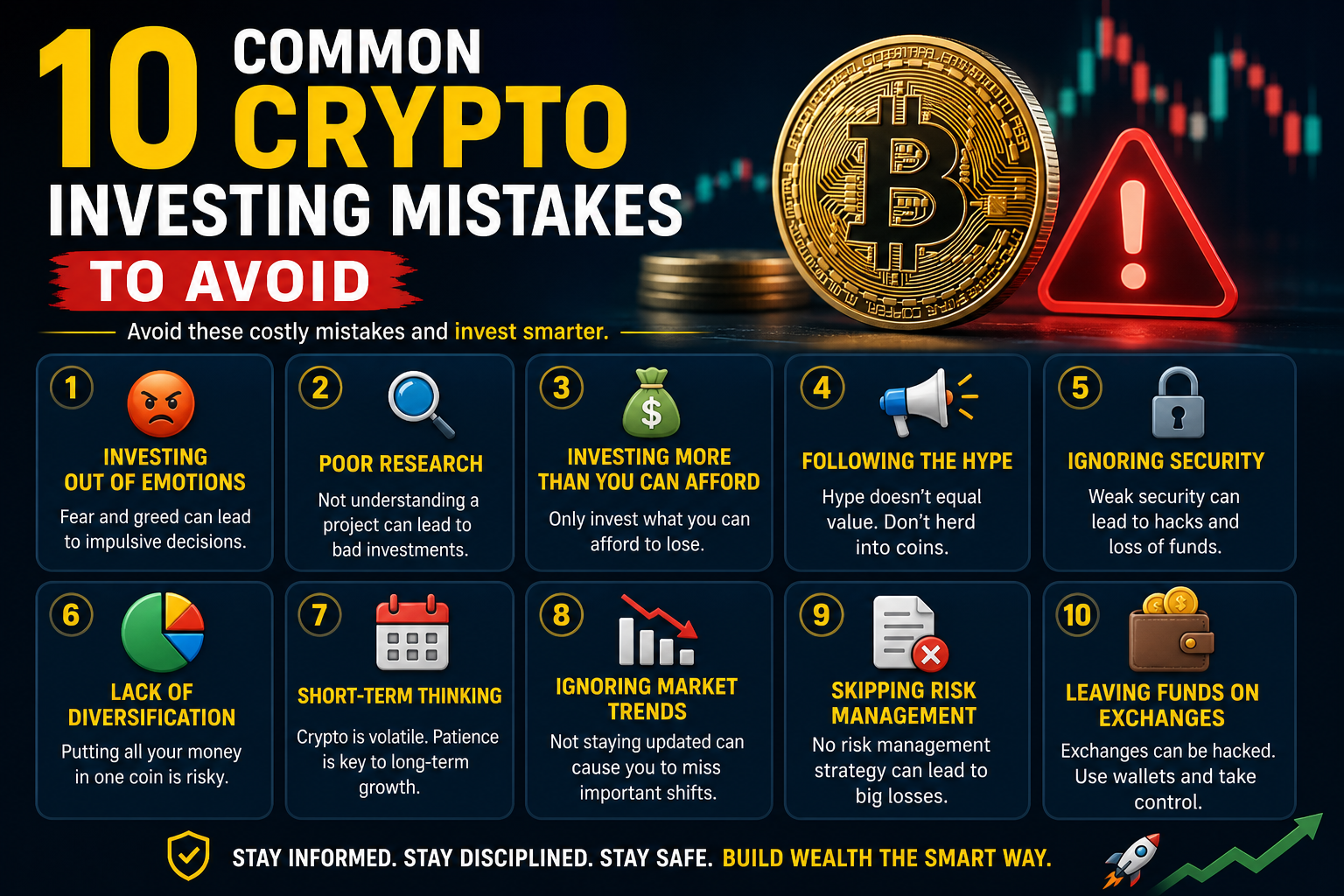
Part 9: Common Mistakes
As you consider is Bitcoin still a good investment, avoid these pitfalls.
| Mistake | Why It’s Dangerous | Fix |
|---|---|---|
| FOMO buying | Buying at peaks leads to losses | Dollar-cost average |
| Panic selling | Locking in losses | Have a long-term horizon |
| Leaving on exchanges | Exchange can freeze or lose funds | Self-custody wallet |
| Investing more than you can lose | Financial stress | Small allocation |
| Not having a plan | Emotional decisions | Write down your strategy |
| Chasing leverage | Can lose everything | No leverage for beginners |
Part 10: What the Experts Say
| Expert | Position | Summary |
|---|---|---|
| Michael Saylor (MicroStrategy) | Extremely bullish | “Bitcoin is digital gold—buy and hold forever” |
| Warren Buffett (Berkshire Hathaway) | Bearish | “Doesn’t produce anything; not an investment” |
| Cathie Wood (ARK Invest) | Bullish | “Could reach $1M+ by 2030” |
| Peter Schiff (Economist) | Extremely bearish | “Bitcoin is worthless; gold is the real store of value” |
| Larry Fink (BlackRock) | Cautiously bullish | “Digital gold; legitimate asset class” |
Part 11: The Verdict—Is Bitcoin Still a Good Investment?
There’s no single answer to is Bitcoin still a good investment. It depends on you.
Bitcoin Is a Good Investment If You:
- Have a long time horizon (5+ years)
- Can tolerate extreme volatility
- Believe in the digital gold narrative
- Want uncorrelated portfolio exposure
- Have a small allocation (1-5%)
Bitcoin Is NOT a Good Investment If You:
- Need the money in the next 3-5 years
- Can’t sleep through an 80% drawdown
- Don’t understand what you’re buying
- Are looking for guaranteed returns
- Would panic-sell during a crash
The Balanced View
Bitcoin is a high-risk, high-potential asset. It has outperformed everything over the past decade, but past performance doesn’t guarantee future results. It has survived multiple “death” events and emerged stronger each time. But it could still fail.
The most sensible approach for most investors: a small allocation (1-5%) as part of a diversified portfolio. Enough to matter if Bitcoin succeeds. Not enough to matter if it fails.
Conclusion
Let’s bring this back to where we started.
Is Bitcoin still a good investment depends on who you are, what you believe, and what you’re willing to risk. The bull case is compelling: digital gold, institutional adoption, fixed supply, global accessibility, and historical returns. The bear case is also compelling: extreme volatility, regulatory risk, no intrinsic value, environmental concerns, and competition.
Neither side is obviously right. The truth probably lies somewhere in between.
If you’re considering Bitcoin, here’s my advice:
- Do your own research (not just this article)
- Start small—$100 or 1% of your portfolio
- Use dollar-cost averaging
- Store in self-custody (hardware wallet)
- Have a long-term horizon
- Rebalance to maintain your target allocation
- Never invest more than you can afford to lose
Bitcoin isn’t for everyone. It might not be for you. But for those who understand the risks and have the temperament to hold through volatility, it remains one of the most interesting investment opportunities of our time.
The question isn’t just is Bitcoin still a good investment. The question is: is it right for you?
Only you can answer that.







Leave a Reply